
Grain size analysis · ASTM E112
Grain size to ASTM E112. In seconds, not an afternoon.
Counting grains by hand is slow, tiring and different for every operator. With MIPAR, every grain in every field is found and measured, and you get the ASTM grain size number G with its confidence interval, the same way on every sample.
Simulated structure, field 500 × 375 µm. One step in G halves the grain area.
Used on
- Steels
- Stainless steels
- Aluminium alloys
- Copper alloys
- Nickel superalloys
- Titanium
- Additive manufactured parts
ASTM E112 methods
Three ways to get G, shown on one titanium image
ASTM E112 allows three procedures. Pick one to see what it does. The two counting methods run on the same image, with the counts done by software instead of a tired pair of eyes.
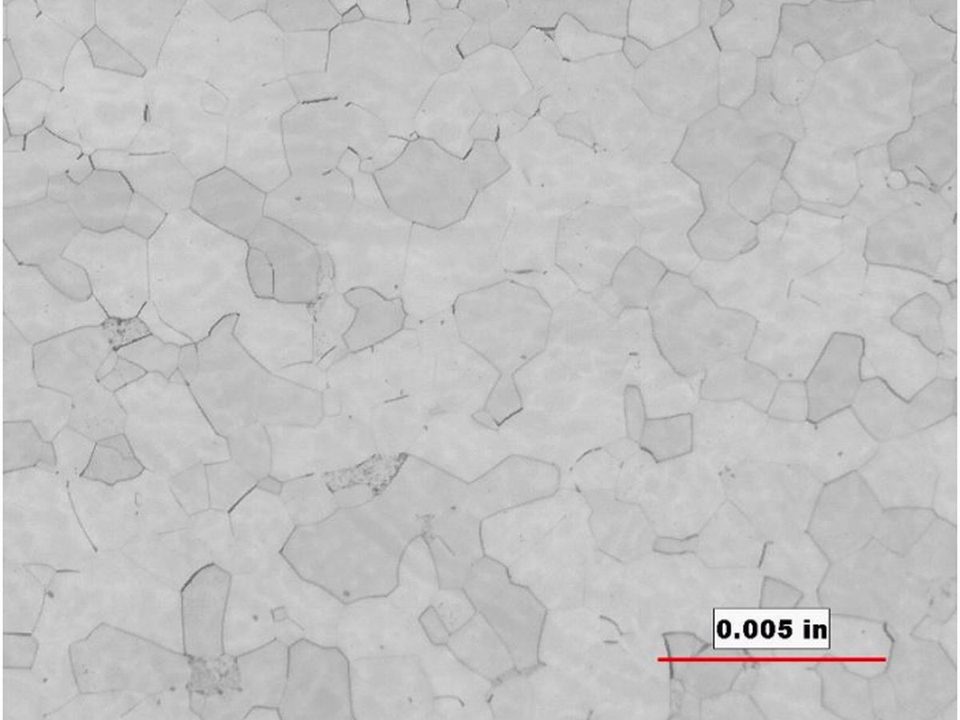
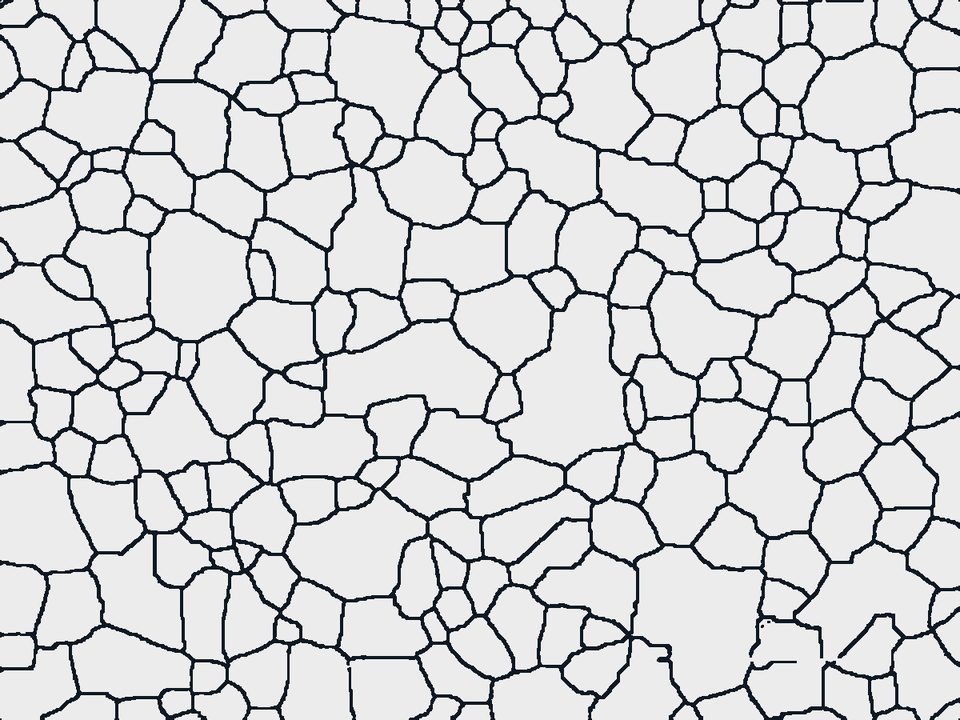
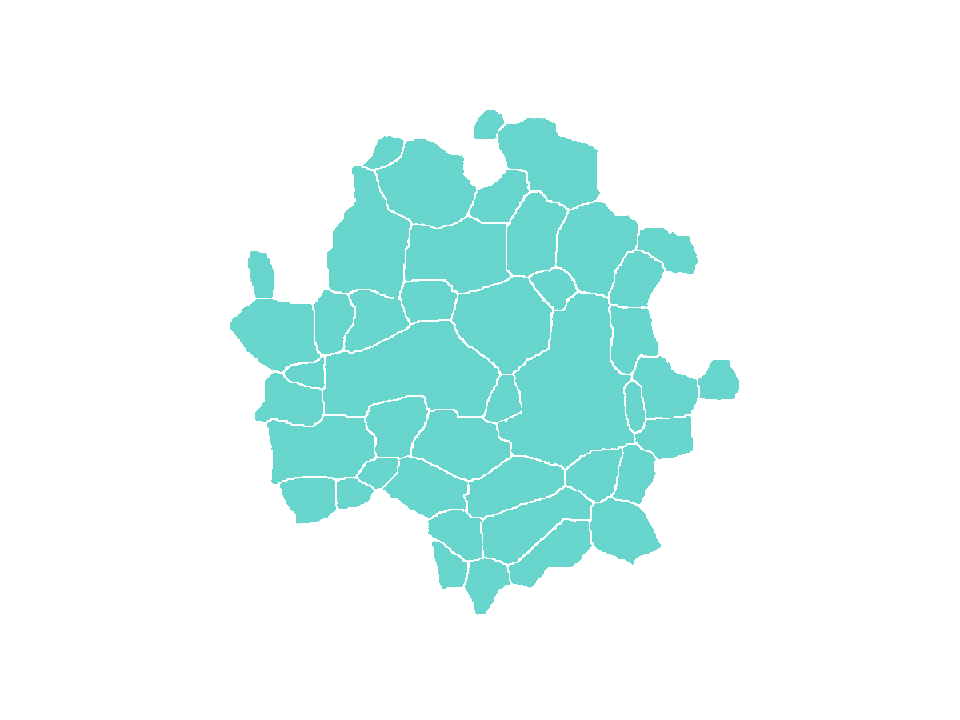
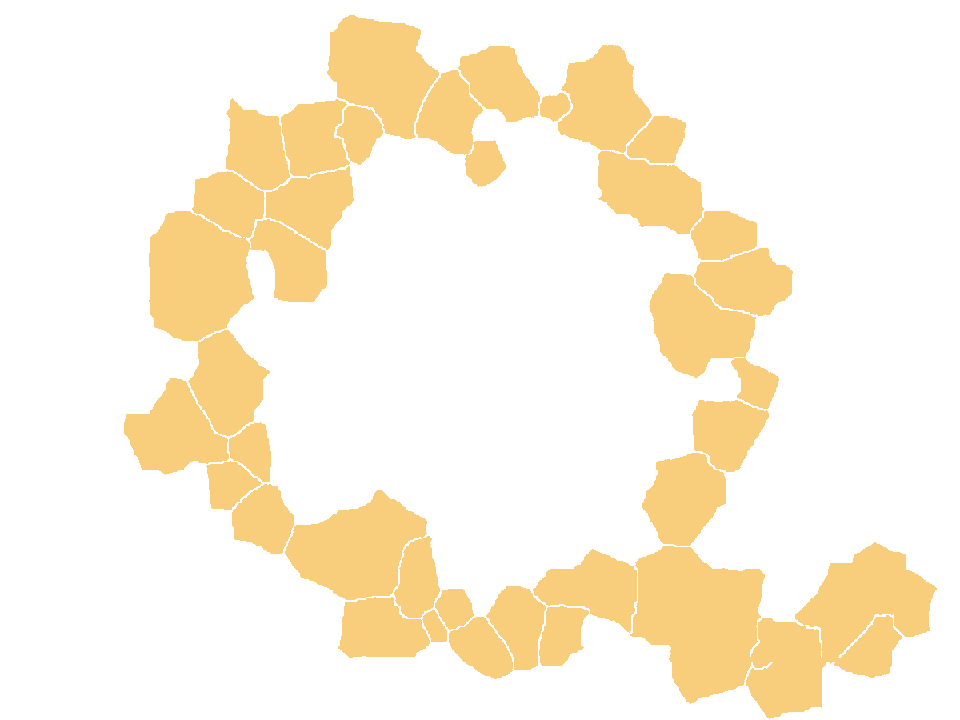 Planimetric · Jeffries circle
Calculator
Convert your measurement to G
Have a mean intercept length or a grain count already? Get the ASTM E112 grain size number straight away. It uses the same equations as the standard.
Manual or automated
Same standard. Very different afternoon.
By hand at the microscope
A few fields, counted one by one
- Minutes per field, so most labs measure only the minimum number of fields
- Two operators rarely get the same count on the same image
- Twins, faint boundaries and edge grains are judged differently each time
- Only a G number survives, the evidence stays at the microscope
With MIPAR
Every grain in every field, measured
- Seconds per field, so you can measure more fields and tighten the confidence interval
- The same recipe gives the same answer, whoever runs it
- Rules for twins, broken boundaries and edge grains are written into the recipe once
- Images, overlays and the full size distribution are saved with the result
What can go wrong
Six things that quietly change your G
Most disagreements about grain size are not about the formula. They come from what gets counted as a grain. Here is how we handle each one when we set up a recipe.
Annealing twins
Copper, nickel and austenitic steels are full of straight twin bands. E112 does not count twin boundaries as grain boundaries.
We train the recipe to ignore them.
Faint or broken boundaries
A weak etch leaves gaps, and two grains get counted as one. G comes out too low.
Boundaries are closed by the recipe, or traced by deep learning.
Grains cut by the image edge
A grain sliced by the field border looks smaller than it is. Counted as whole, it skews the size distribution.
Edge grains are excluded or weighted as the method requires.
Duplex structures
A mix of very large and very small grains has no single meaningful average.
You get the full distribution, so two populations show as two peaks.
Wrong scale
A missing or wrong calibration shifts every result. A 10% scale error moves G by about 0.3.
Calibration is stored per objective and checked in the recipe.
Too few fields
One field is a guess. E112 asks for several fields and a confidence interval on the mean.
Batch processing makes ten fields as quick as one.
From sample to report
How we set it up in your lab
- 1 · Acquire
Calibrated images
Your microscope and camera, with a stored scale for each objective. We can also supply the camera.
- 2 · Analyse
A MIPAR recipe
Built and tested on your own material and etch. See how recipes work.
- 3 · Report
G, CI and distribution
Grain size number, 95% confidence interval, relative accuracy and the full histogram for every sample.
- 4 · Comply
Traceable results
Audit trail and sign-off where you need them. See our data compliance service.
Questions
Grain size and ASTM E112, answered
What is the ASTM grain size number G?
G is a single number that describes the average grain size. It is defined so that at 100× magnification there are 2G−1 grains per square inch. A higher G means finer grains, and each step of 1 halves the average grain area.
What is the difference between ASTM E112 and ASTM E1382?
E112 describes the comparison, planimetric and intercept procedures, mostly as done by an operator. E1382 covers determining grain size with semi-automatic and automatic image analysis. With MIPAR you can report to both.
Which method should we use, planimetric or intercept?
Both are accepted and give comparable results on equiaxed grains. The intercept method is usually faster by hand and is preferred for elongated grains. With image analysis the speed difference disappears, so we often report both.
Do annealing twins count as grain boundaries?
No. For grain size, twin boundaries are ignored. This matters for copper, nickel alloys and austenitic stainless steels, and it is one of the main reasons manual results differ between operators.
How many fields do we need to measure?
E112 asks for several fields, chosen at random, and a statistical analysis with a 95% confidence interval. How many depends on the variation in your material and the accuracy you need. Automated measurement makes extra fields cheap.
Can you test our own images first?
Yes. Send us three typical fields with the scale, and we will return the grain size and a short comparison with your current result. It is free.
Send us three fields. Get your G back.
Include the scale and, if you have it, the grain size you measured by hand. We’ll show you both side by side in a short call.