AI Image Analysis in Materials Science – EAMC 2026
How AI image analysis is transforming materials science: SciSpot’s recap of EAMC 2026 in Stockholm – deep learning, MIPAR Spotlight, and real case studies.
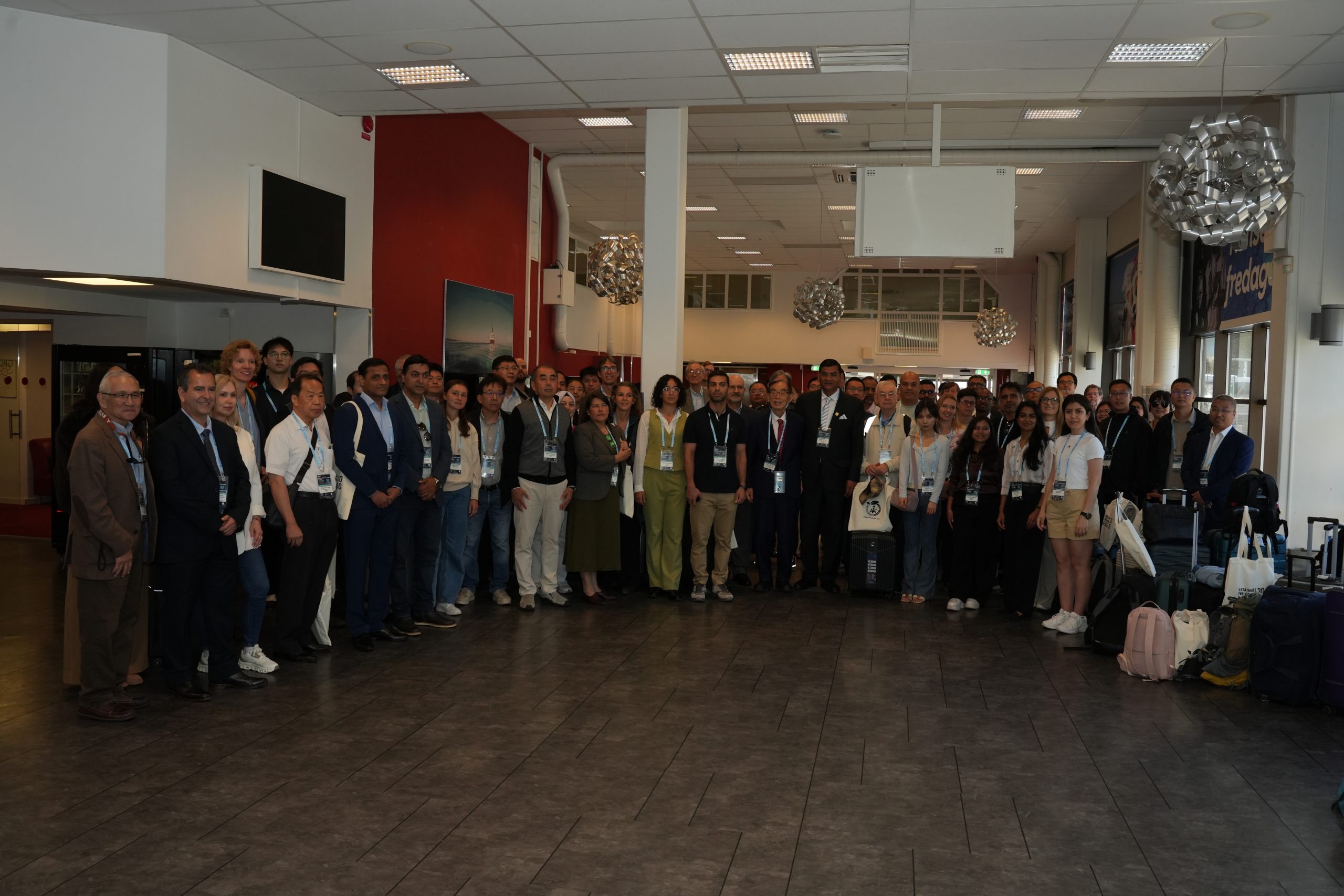
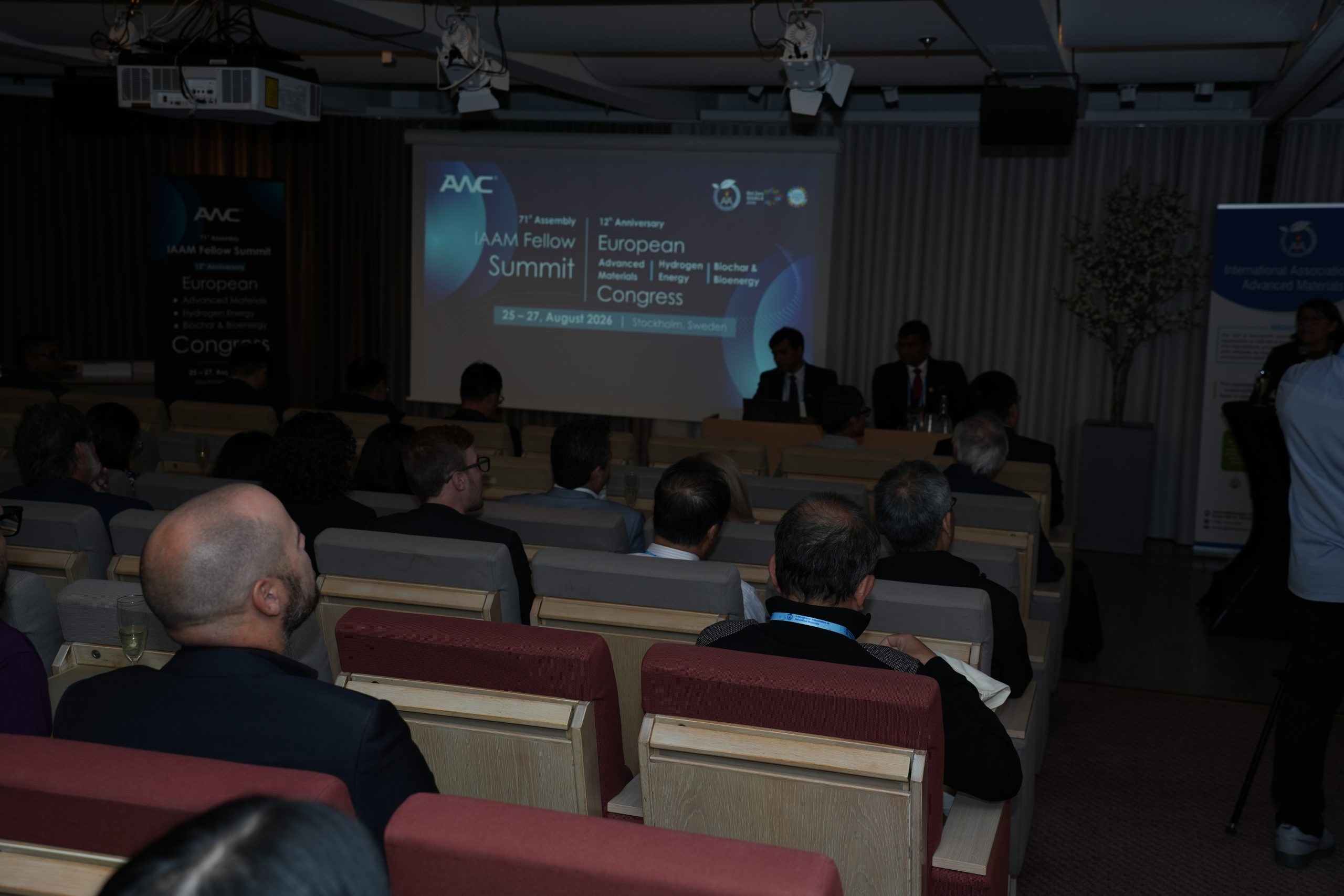
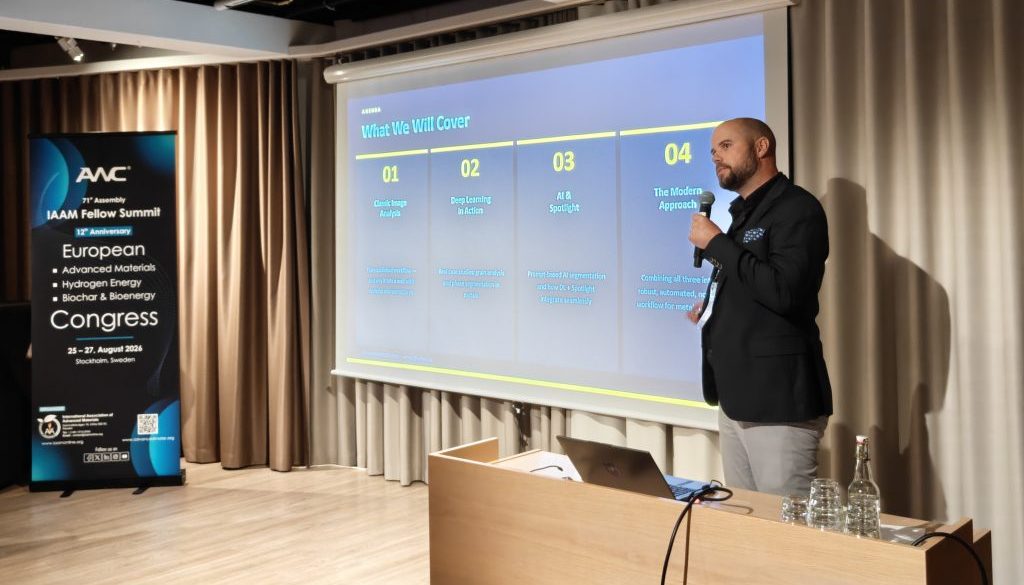
Some conferences you attend. Others you sail. From 25 to 27 August, the European Advanced Materials Congress (EAMC 2026) took place aboard a Baltic Sea round voyage between Stockholm and Helsinki — the International Association of Advanced Materials’ signature “Knowledge Experience at Sea” format. For three days, more than 200 presentations from over 50 countries filled the program — and AI image analysis in materials science was on everyone’s lips, including in SciSpot’s own session.
Now that we’re back on dry land, here’s a look at what we presented, what we heard, and why we believe the materials community is at a genuine turning point.
A congress with a mission
Marking twelve years of the Advanced Materials Congress series, EAMC 2026 gathered researchers, engineers, and industry innovators under the theme “Advanced Materials for Green Innovation and Resilient Future.” The symposia spanned everything from structural and engineering materials to computational chemistry, catalytic materials, and energy technologies — with one thread running through nearly all of them: data, AI, and materials informatics are no longer side topics. They are becoming part of how materials science gets done.
That made it the perfect audience for our contribution.
What we presented: From Classical Image Analysis to AI
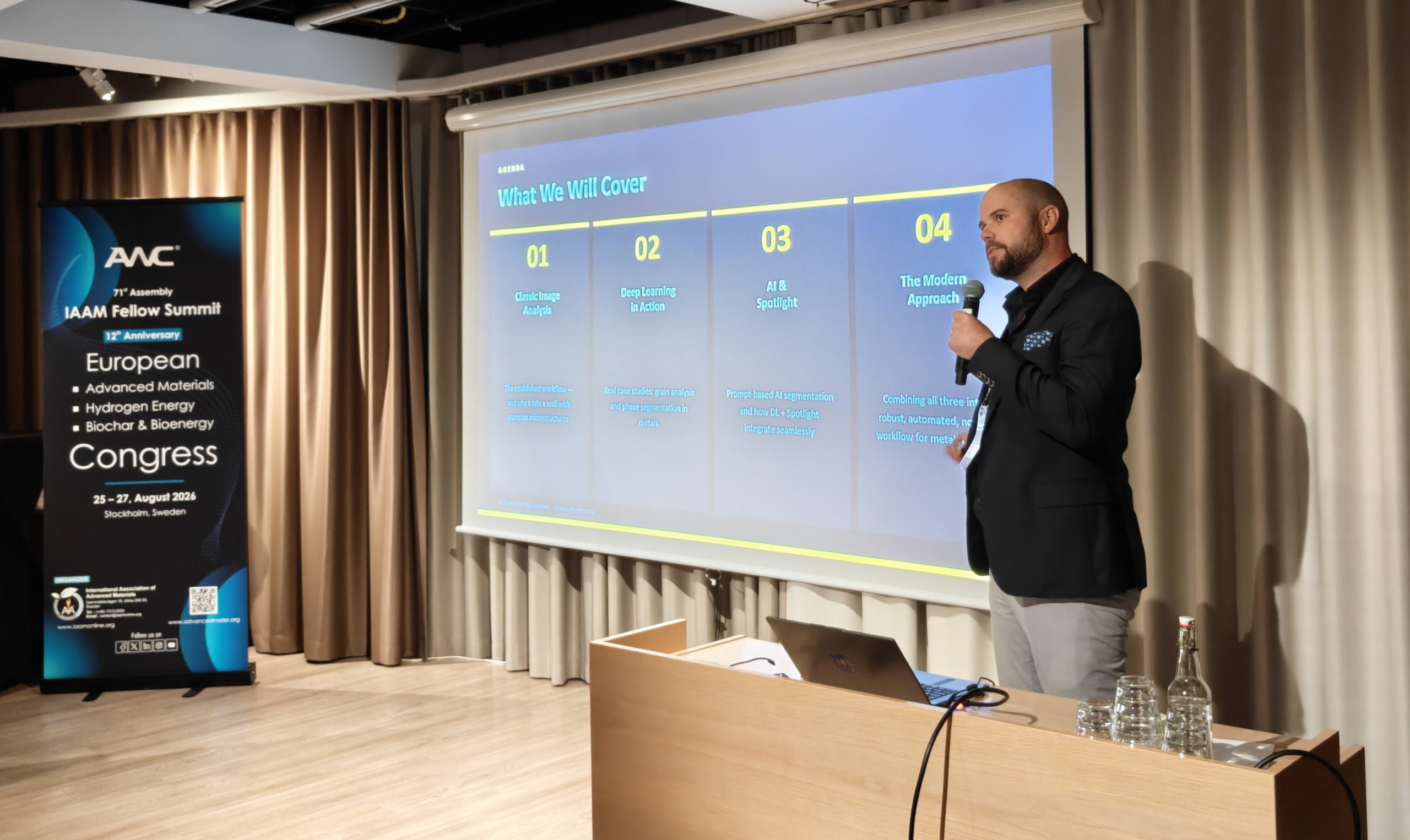
Our talk traced the evolution of quantitative microscopy in three stages.
Where classical methods hit a wall. Traditional image analysis pipelines — thresholding, filtering, watershed segmentation — have served materials labs well for decades. But they struggle exactly where modern materials work gets interesting: low-contrast grain boundaries, twinned grains, overlapping particles, and imaging conditions that vary from sample to sample. The result is familiar to anyone who has spent an afternoon tuning parameters: fragile recipes and a lot of manual cleanup.
What deep learning changes. Deep learning takes a fundamentally different approach — it learns what a feature looks like from examples rather than from hand-tuned rules. We walked through two case studies that make the difference concrete: grain analysis of twinned grains in brass, and beta grain reconstruction in titanium. Both are notoriously difficult for classical methods, and both become tractable, repeatable measurements with a trained model.
Prompt-based AI with MIPAR Spotlight. The most engaging part of the session was live: MIPAR’s Spotlight technology, which brings prompt-based AI segmentation to materials images. Instead of building a model from scratch, you show Spotlight what you’re looking for — and it finds it. We demonstrated grain analysis across multiple alloy systems, nanoparticle size and shape distributions, contaminant classification, layer thickness measurement, and weld dimensional analysis. The message of the final slides summed it up: classical tools, deep learning, and prompt-based AI are not competitors. Combined, they form the modern, automated image analysis workflow.
What we took home
Three impressions stayed with us from the discussions on board:
AI has crossed from promise to practice. The questions we received were not “does this work?” but “how do we validate it?”, “how do we integrate it into our quality workflows?”, and “how fast can our team learn it?” That shift in questioning says everything about where the field is.
Reproducibility is the real prize. For many researchers we spoke with, the appeal of AI-driven segmentation is not only speed — it’s removing operator-to-operator variability from measurements that feed into publications, certifications, and production decisions.
Sustainability needs measurement. EAMC’s green innovation theme connects directly to our corner of the field. Whether it’s characterizing recycled alloys, qualifying additively manufactured parts, or developing energy materials, progress depends on trustworthy, efficient microstructural analysis. Better measurement is quiet infrastructure for greener materials.
Thank you
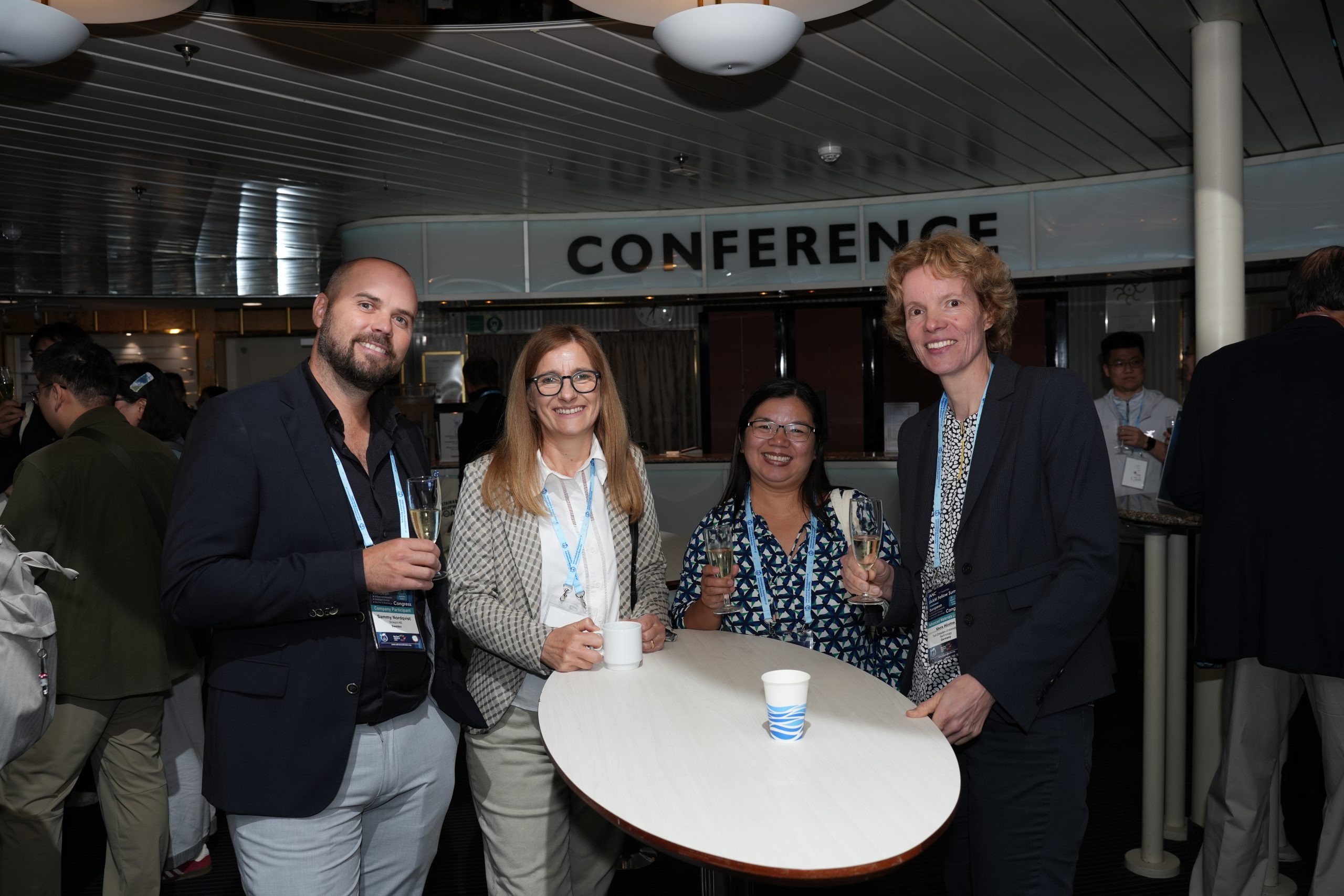
Our sincere thanks to the IAAM and the congress organizers for a superbly run event and a format that genuinely encourages conversation — it is hard to rush off to your hotel when the venue is a ship. Thank you to everyone who attended our session, asked sharp questions, and continued the discussion over coffee (and calm seas). These exchanges are the reason we attend.
Continue the conversation
If we met on board — or if this recap is your first introduction to AI-powered image analysis — we would be glad to show you what these tools can do on your images. A typical proof of concept starts with your own micrographs and agreed success criteria, so you can validate the results independently before committing to anything.
Get in touch at sammy@scispot.de or visit www.scispot.de to arrange a demo of MIPAR and Spotlight.
SciSpot AB is the authorized European distributor of MIPAR image analysis software, supporting materials researchers and industrial labs across Europe with modern, AI-driven image analysis solutions.